
Smart Devices Still Act Like Separate Gadgets
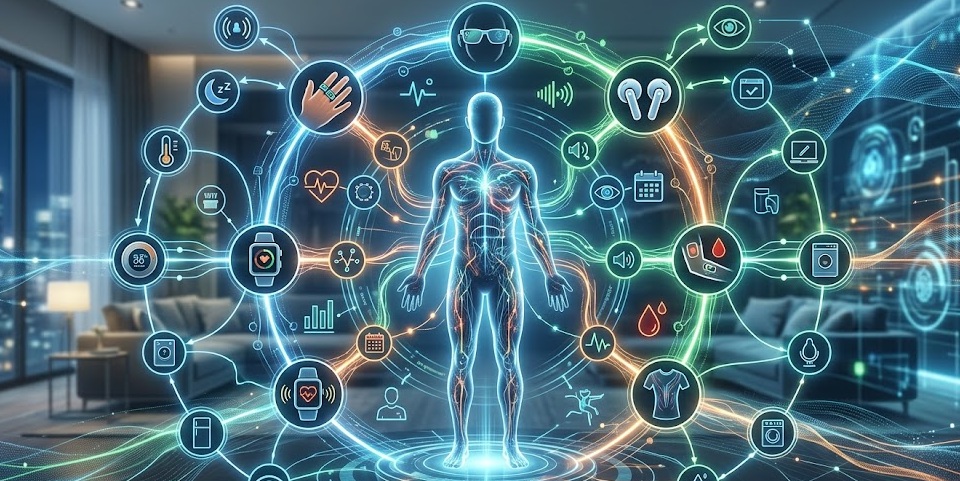
Smart devices have become small enough to disappear into daily life. Rings sit on fingers while people sleep. Watches collect heart rate, movement, temperature, location, notifications, payments, and emergency signals. Glasses are starting to see what we see and hear what we hear. Earbuds can test hearing, translate speech, and understand ambient sound. Continuous glucose monitors can show what food, stress, sleep, and workouts do to the body in real time. Smart beds, thermostats, cars, appliances, home sensors, and even clothing are all collecting pieces of the same story.
The problem is that they are still not acting like they belong to the same story.
Most smart device integrations today are shallow. A watch can send steps to a fitness app. A ring can send sleep data to a health dashboard. These are useful, but they are not the full promise of smart technology. They are mostly device to app integrations, not life level integrations. The real opportunity is not more tracking. It is coordination. Smart devices should not just measure what happened. They should help the rest of the user’s environment respond intelligently, safely, and privately.