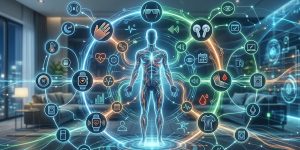
Smart devices have become small enough to disappear into daily life. Rings sit on fingers while people sleep. Watches collect heart rate, movement, temperature, location, notifications, payments, and emergency signals. Glasses are starting to see what we see and hear what we hear. Earbuds can test hearing, translate speech, and understand ambient sound. Continuous glucose monitors can show what food, stress, sleep, and workouts do to the body in real time. Smart beds, thermostats, cars, appliances, home sensors, and even clothing are all collecting pieces of the same story.
The problem is that they are still not acting like they belong to the same story.
Most smart device integrations today are shallow. A watch can send steps to a fitness app. A ring can send sleep data to a health dashboard. Glasses can take a photo or answer a question. A smart speaker can turn off a light. A thermostat can follow a schedule. These are useful, but they are not the full promise of smart technology. They are mostly device-to-app integrations, not life-level integrations.
The real opportunity is not more tracking. It is coordination. Smart devices should not just measure what happened. They should help the rest of the user’s environment respond intelligently, safely, and privately.
A ring should not simply say someone slept poorly. It should help the alarm, calendar, thermostat, coffee routine, workout plan, and notification settings adjust around that reality. A watch should not only detect exercise. It should know whether the user is under-recovered, dehydrated, rushing, driving, entering a meeting, or handling a medical issue, then pass the right signal to the right system. Glasses should not just be a camera on the face. They should become a context layer for work, accessibility, shopping, navigation, learning, repair, and real-time assistance.
We have the sensors. What is missing is the shared intelligence between them.
Smart Rings: The Most Underused Quiet Computer
Smart rings may be one of the most underrated device categories because they are not trying to be small phones. That is exactly what makes them valuable. A ring can be worn while sleeping, showering, working, traveling, and exercising with less friction than a watch. It is close to the skin. It is personal. It is passive. It does not demand attention every few seconds.
That makes the smart ring ideal for integrations that should run in the background.
The obvious use case is health tracking: sleep, heart rate, heart rate variability, skin temperature, stress, recovery, and activity. But the deeper opportunity is context. A ring can become the body’s status signal for the rest of the user’s devices.
For example, if someone’s ring shows poor sleep and elevated stress, their watch should not push an aggressive workout. Their calendar should suggest moving nonessential deep-work tasks later. Their phone should reduce low-priority notifications. Their smart lights should shift toward calmer brightness in the evening. Their thermostat could cool the room earlier if the user’s sleep is repeatedly disrupted by temperature. Their glasses could give fewer nonurgent prompts. Their music app could start with a lower-stimulation playlist during the morning.
The ring could also become a stronger identity and consent device. A phone unlocks because it recognizes a face or fingerprint, but the ring can continuously confirm that the right person is present. That could matter for smart homes, cars, workplaces, payments, hotel rooms, gyms, hospitals, and shared devices. Instead of logging in over and over, a person wearing an authenticated ring could walk into a room and have the room know which profile to load.
This is especially useful in smart homes. Today, homes often react to whoever owns the hub, not whoever is actually in the room. A ring could tell the home that a specific person entered the kitchen, then adjust lighting, audio, accessibility settings, preferred appliance modes, or even food reminders. In a household with multiple people, the home could stop treating everyone as one generic user.
Rings are also underused in safety. A ring could detect patterns that suggest illness, exhaustion, heat stress, alcohol-related impairment, or abnormal recovery. It does not need to diagnose disease to be useful. It could simply say the user’s body is outside its normal range and adjust the surrounding systems accordingly. A car could suggest not driving. A work app could suggest delaying high-risk manual labor. A training app could swap a high-intensity session for mobility work. A travel app could recommend hydration and rest after a red-eye flight.
The mistake would be turning rings into another notification device. Their strength is silence. They should be the hidden signal that helps the rest of the tech stack behave better.
Smart Watches: Still Treated Like Phone Extensions
Smart watches are more mature than smart rings, but they are also held back by the way people think about them. Too many watch integrations are still framed around notifications, fitness rings, basic payments, and app shortcuts. That is useful, but limited.
The watch is positioned on the wrist, which makes it a great control point. It has haptics, sensors, a screen, microphones, location awareness, emergency features, and user attention. It is close enough to the body to measure, but visible enough to ask for confirmation.
That makes the watch the ideal bridge between passive sensing and active decision-making.
One of the most ignored integrations is consent. As smart environments become more automated, users need simple ways to approve, deny, or modify actions. The watch could become the private approval layer for health data sharing, smart home changes, purchases, workplace access, child safety alerts, and AI assistant actions. Instead of every system asking through a phone app, the watch could provide a fast haptic prompt: approve, snooze, deny, share once, share for one hour, or never ask again.
The watch is also underused for emergency context. Current emergency features are helpful, but the next step is richer handoff. If someone falls, faints, crashes, or has an abnormal health event, the watch should be able to package relevant context for emergency contacts or medical responders: location, medical ID, recent exertion, medication reminders, allergy profile, heart-rate trend, and whether the user was driving, exercising, sleeping, or working. Privacy has to be strict, but in emergencies, the watch can be the difference between a vague alert and a useful one.
Another overlooked area is work. For nurses, warehouse workers, construction crews, delivery drivers, hospitality staff, first responders, and field technicians, the watch could be more than a step counter. It could coordinate fatigue alerts, heat exposure, shift load, hydration prompts, location safety, task handoffs, and incident reporting. A watch paired with smart glasses could guide a technician through a repair without making them pull out a phone. A watch paired with a ring could distinguish physical strain from emotional stress. A watch paired with an access system could unlock the right equipment only when the right trained worker is present.
The watch also has a major role in navigation. Phones and car screens are visual. Glasses may become visual. But the wrist is excellent for subtle haptics. A watch can guide someone through a city, airport, hospital, warehouse, campus, or hiking trail without forcing them to stare at a screen. This becomes even more powerful when paired with glasses: glasses show the visual cue only when needed, while the watch provides quiet directional feedback.
The watch’s future is not being a smaller phone. It is being the user’s real-time command and consent center.
Smart Glasses: More Than Cameras and Novelty AI
Smart glasses are getting attention because they are finally becoming light enough to wear casually. But the market is still in an awkward phase. Many people understand the camera use case. Many understand calls, music, translation, and AI questions. Fewer people understand the deeper integration opportunity.
Glasses are not just another wearable. They are the first mainstream device category that can connect digital assistance directly to the user’s field of view.
That matters because many problems are visual and situational. A phone assistant requires the user to stop, open an app, type or talk, read a response, and translate that response back into the real world. Glasses can remove several of those steps. They can see the object, place, sign, tool, route, appliance, document, shelf, or person the user is dealing with.
The underused opportunity is not just asking glasses questions. It is connecting what the glasses see with the rest of the user’s devices and services.
In the kitchen, glasses could recognize ingredients, check dietary restrictions, connect to a smart oven, warn about allergens, adjust cooking steps based on available tools, and sync meal data with a glucose monitor or nutrition app. In home repair, glasses could identify a part, show the correct orientation, connect to a hardware store inventory system, and let a remote expert see the issue. In healthcare, glasses could support clinicians with hands-free notes, patient context, translation, and procedural checklists. In education, they could provide captions, definitions, diagrams, or language support without making the student look away. In retail, they could compare prices, check fit, flag sustainability information, or help visually impaired shoppers navigate aisles.
Accessibility may be one of the biggest ignored areas. Glasses could read signs, summarize surroundings, identify obstacles, describe objects, translate speech, caption conversations, and help people with memory, aphasia, hearing loss, low vision, or anxiety in public places. The technology does not need to be perfect to be meaningful. It needs to be predictable, consent-based, and designed around real human needs.
The privacy issue is real. Glasses with cameras and microphones can make other people uncomfortable. That means integrations must be designed around visible recording indicators, local processing where possible, clear controls, and social norms. Smart glasses cannot become trusted if they feel like invisible surveillance.
The best version of smart glasses is not a face-mounted phone. It is an assistive layer that appears only when useful.
Earbuds and Hearables: The Ignored Always-On Interface
Earbuds may be one of the most overlooked smart device categories because people still think of them mainly as audio accessories. That view is outdated. Earbuds sit in one of the most information-rich positions on the body. They can deliver private audio, collect voice input, detect head movement, support hearing features, measure some biometric signals, and understand the user’s sound environment.
Their biggest underused role is ambient intelligence.
An earbud can know whether the user is in a loud restaurant, a quiet office, a car, a concert, a construction site, a classroom, a hospital, or a windy sidewalk. It can adjust not only volume, but also notifications, transcription, translation, hearing protection, and focus modes. Instead of a phone deciding when to interrupt, earbuds can help determine whether the interruption is appropriate for the user’s current sound environment.
Hearables are also a major accessibility category. Hearing support, conversation enhancement, live captions, translation, and sound classification should not be isolated features. They should integrate with calendars, maps, smart glasses, watches, and communication apps. Imagine walking into a meeting and having earbuds identify the room acoustics, glasses display speaker names and captions, the watch offer private controls, and the phone save the transcript into the correct project folder.
Earbuds can also help with safety. They can detect sirens, alarms, glass breaking, a baby crying, someone calling the user’s name, or dangerous noise levels. Paired with location and motion data, they could decide whether to lower noise cancellation, send a haptic alert to the watch, or visually flag something through glasses.
The ignored opportunity is that earbuds are not only for listening. They are for managing the user’s relationship with the surrounding soundscape.
Continuous Glucose Monitors and Biochemical Sensors: Useful Beyond Diabetes
Continuous glucose monitors are moving beyond traditional medical use into broader metabolic awareness. That creates a huge integration opportunity, but the current experience is still often trapped in dashboards and charts.
The real value is not just seeing a glucose spike. It is helping the user understand what caused it and what to do next.
A CGM could integrate with meal planning, grocery shopping, restaurant menus, smart kitchens, workout apps, sleep trackers, medication reminders, and stress management tools. If a user’s glucose response is consistently poor after certain breakfasts, the system could suggest alternatives that fit their preferences and budget. If a walk after dinner improves the response, the watch could suggest a short route. If poor sleep worsens glucose variability, the ring and thermostat could help optimize bedtime. If stress is a major driver, the system could distinguish food-related patterns from stress-related patterns.
Biochemical patches could eventually go beyond glucose to hydration, lactate, cortisol-related signals, electrolyte balance, or other markers. The danger is turning all of this into obsessive self-monitoring. The opportunity is turning it into practical, low-friction support.
This category is especially important because it connects behavior to biology in near real time. But it should not sit alone. It should connect with the ring, watch, phone, kitchen, grocery cart, calendar, and clinician only when the user wants that connection.
Smart Beds and Sleep Environments: Too Much Tracking, Not Enough Action
Sleep tracking is everywhere, but sleep improvement is still fragmented. A ring may track sleep. A watch may track sleep. A smart bed may track sleep. A thermostat may control temperature. Smart lights may control brightness. A phone may manage alarms. A speaker may play white noise. A calendar may determine wake time. Yet these systems often barely coordinate.
That is a massive missed opportunity.
A truly integrated sleep system would not just report that the user slept badly. It would ask why and adjust the environment. Was the room too warm? Did the user eat late? Was alcohol involved? Did noise increase? Did the mattress detect restlessness? Was the user’s schedule inconsistent? Did their glucose pattern suggest late-night disruption? Did stress remain elevated into bedtime?
The smart bed, ring, thermostat, lights, curtains, phone, and calendar should work as one system. If the user has an early flight, the system should shift the bedtime routine earlier. If the user is running hot, the bed or thermostat should cool gradually. If the user wakes frequently at 3 a.m., the system should look at temperature, light, noise, stress, and food patterns instead of just showing another sleep score.
The ignored integration is closed-loop sleep. Track, adjust, learn, repeat.
Smart Clothing and Textiles: The Wearable Category People Forget
Smart clothing has been discussed for years, but it still has not become mainstream. That does not mean it lacks value. It means the integrations have not been compelling enough.
Clothing can measure posture, movement, muscle activity, breathing, temperature, sweat, pressure, and joint motion in ways that watches and rings cannot. For athletes, physical therapists, elderly users, workers, soldiers, and people recovering from injuries, textiles could provide richer data than wrist-based sensors.
The missing piece is integration into useful workflows.
A smart shirt could guide breathing exercises during stress. Smart socks could detect gait changes that suggest injury risk. Smart compression garments could help with rehab exercises. Smart workwear could detect heat stress or unsafe posture. Smart uniforms could monitor fatigue in high-risk jobs. Smart baby clothing could help parents understand sleep and temperature patterns. Smart eldercare garments could detect mobility changes before a fall happens.
The challenge is that clothing has to be washable, comfortable, durable, affordable, and not weird. But if those problems are solved, smart textiles could become one of the most natural forms of sensing because clothing is already part of daily life.
Cars: The Smart Device People Sit Inside
Cars are often treated separately from wearables, but they should be part of the same integration conversation. A modern car is a rolling sensor platform with location, driver behavior, cameras, microphones, navigation, climate control, entertainment, safety systems, and increasingly, electric charging.
Yet cars rarely make full use of personal wearable context.
A car could know the driver is sleep-deprived from their ring, stressed from their watch, or distracted from their phone behavior. It could adjust route suggestions, cabin lighting, climate, music, and alerts. It could recommend a rest stop if recovery data and driving behavior both look poor. It could coordinate with the calendar to avoid unnecessary rush. It could connect with glucose data to suggest food stops that fit the user’s needs instead of whatever is closest.
Electric vehicles also create major smart home integration opportunities. EV chargers, solar panels, home batteries, heat pumps, water heaters, and appliances should coordinate around energy prices, carbon intensity, weather, household routines, and user priorities. The car should not just charge when plugged in. It should understand when energy is cheapest, when the user needs range, when the home battery should discharge, and when the grid is under stress.
The car is not just transportation. It is a personal environment, a safety system, an energy asset, and a smart home extension.
Appliances: Still Smarter in Theory Than in Practice
Smart appliances remain deeply underused. Many connected appliances still feel like gimmicks because their integrations are too narrow. A fridge with a screen is not enough. A washing machine notification is not enough. An oven app is not enough.
The opportunity is practical coordination.
A refrigerator should help plan meals around expiration dates, dietary goals, glucose patterns, family schedules, grocery prices, and cooking time. An oven should coordinate with recipe apps, smart glasses, food thermometers, and household schedules. A washer should coordinate with energy prices, water usage, detergent supply, fabric type, and when someone will actually be home to move clothes to the dryer. A dishwasher should run when energy and water conditions make sense. A water heater should coordinate with sleep, showers, electricity rates, and solar production.
Smart appliances should also be easier for renters and older homes. The industry often focuses on replacing appliances, but many people need retrofit intelligence: smart plugs, water sensors, vibration sensors, camera-based inventory, and simple hubs that can make existing homes more responsive.
The ignored opportunity is not flashy appliances. It is appliances that quietly reduce waste, cost, effort, and mistakes.
Smart Home Sensors: The Most Boring Devices May Be the Most Important
Presence sensors, contact sensors, water leak sensors, air quality sensors, humidity sensors, light sensors, soil sensors, motion sensors, and energy monitors are not glamorous. But they may matter more than many expensive devices because they create context.
A smart home that only responds to voice commands is not very smart. A smart home that understands presence, air quality, energy load, water risk, sleep patterns, and room-by-room activity becomes much more useful.
These sensors are underused because they are usually configured as simple triggers. Motion detected, turn on light. Door opened, send alert. Leak detected, notify phone. That is only the first layer.
The better integration is pattern recognition. A bathroom humidity sensor could prevent mold by coordinating the fan, window, and HVAC. A water sensor could shut off a valve, notify the homeowner, and document damage for insurance. Air quality sensors could coordinate purifiers, windows, HVAC, and outdoor pollution data. Presence sensors could reduce heating and cooling in unused rooms. Soil sensors could coordinate irrigation with weather forecasts, water restrictions, and plant type.
The ignored truth is that the smart home does not need more screens. It needs better sensing and better rules.
Wallets, Keys, Bags, and Everyday Objects
Some of the most ignored smart integrations involve ordinary objects: wallets, keys, backpacks, luggage, medication cases, lunch boxes, tools, strollers, bikes, helmets, and pet collars.
Location tracking is only the beginning. A smart bag could know whether it contains a laptop, medication, passport, charger, or work badge before the user leaves home. A medication case could coordinate with a watch, caregiver app, pharmacy refill system, and travel schedule. A smart helmet could connect crash detection with a phone, bike computer, emergency contact, and insurance record. A pet collar could integrate with home doors, feeding schedules, health tracking, and neighborhood safety alerts.
These objects do not need big screens or complex apps. They need simple integrations that prevent common problems.
Did you forget your medication? Is your child’s backpack missing their lunch? Did your luggage leave the airport without you? Did your dog get out while the front door was open? Did your tool leave the job site? Did your bike move while you were inside?
This is where smart technology can feel genuinely helpful because the problems are concrete.
The Integration Layer That Is Missing
The future of smart devices depends on a shared context layer. That does not mean one company should own everything. It means devices need a trusted way to communicate intent, state, permissions, and actions.
A useful context layer would answer questions like:
Who is present?
What are they doing?
What state is their body in?
What environment are they in?
What devices are nearby?
What is allowed to happen automatically?
What requires consent?
What data should stay local?
What should be shared temporarily?
What should never be shared?
Without that layer, smart devices remain isolated. With it, they can become coordinated.
The best integrations will be event-based, not dashboard-based. A person should not have to open five apps to understand their morning. Their devices should quietly coordinate around the event: poor sleep, early meeting, high stress, bad air quality, delayed commute, low glucose stability, and a cold bedroom. The output should be a practical adjustment, not a pile of charts.
Privacy Will Decide Whether This Works
The more powerful smart device integrations become, the more sensitive they become. Rings, watches, glasses, earbuds, glucose monitors, beds, cars, and home sensors can reveal health, habits, relationships, location, work routines, sleep, stress, fertility signals, disability, religion, diet, finances, and private conversations.
That means the next era of smart devices cannot be built on vague permission screens.
Users need granular consent. They need temporary sharing. They need local processing where possible. They need clear logs showing what device accessed what data and why. They need the ability to delete data across connected services. They need privacy modes for guests, children, roommates, patients, employees, and public spaces. They need devices that fail safely when the internet goes down.
Most importantly, integrations should be designed around minimum necessary data. A thermostat does not need someone’s full health history to cool a bedroom. It may only need a sleep temperature preference. A grocery app does not need all biometric history to suggest better breakfast options. It may only need user-approved meal response patterns. A workplace safety system does not need to expose a worker’s private stress data to management. It may only need a risk score that triggers a break.
Smart integration without privacy will feel creepy. Smart integration with privacy can feel like relief.
What Is Really Being Ignored
The ignored opportunity is not one device category. It is the space between device categories.
Rings are ignored as identity, recovery, and background context devices.
Watches are ignored as consent, safety, haptic guidance, and work coordination devices.
Glasses are ignored as accessibility, task assistance, visual search, and real-world context devices.
Earbuds are ignored as hearing, translation, sound awareness, and private AI interfaces.
Glucose monitors and biochemical patches are ignored as behavior feedback systems that can coordinate food, sleep, stress, and exercise.
Smart beds are ignored as active sleep environment controllers.
Smart textiles are ignored as movement, posture, rehab, and occupational safety systems.
Cars are ignored as wearable-aware safety environments and home energy assets.
Appliances are ignored as energy, nutrition, water, and waste reduction tools.
Home sensors are ignored as the quiet foundation of real automation.
Everyday objects are ignored as simple prevention tools for forgotten items, safety events, medication routines, pets, travel, and work gear.
The next wave of smart device value will not come from adding another screen. It will come from making the devices people already own work together with more context, less friction, and stronger privacy.
The smart future is not a ring, a watch, or a pair of glasses. It is what happens when the ring knows the body, the watch manages consent, the glasses understand the scene, the earbuds understand the sound, the home understands the environment, the car understands the trip, and the user remains in control of all of it.